Podcast

#45 – “I used to pretend I built my own spaceship”: Screenwriter Eric Luke on Joe Dante’s EXPLORERS

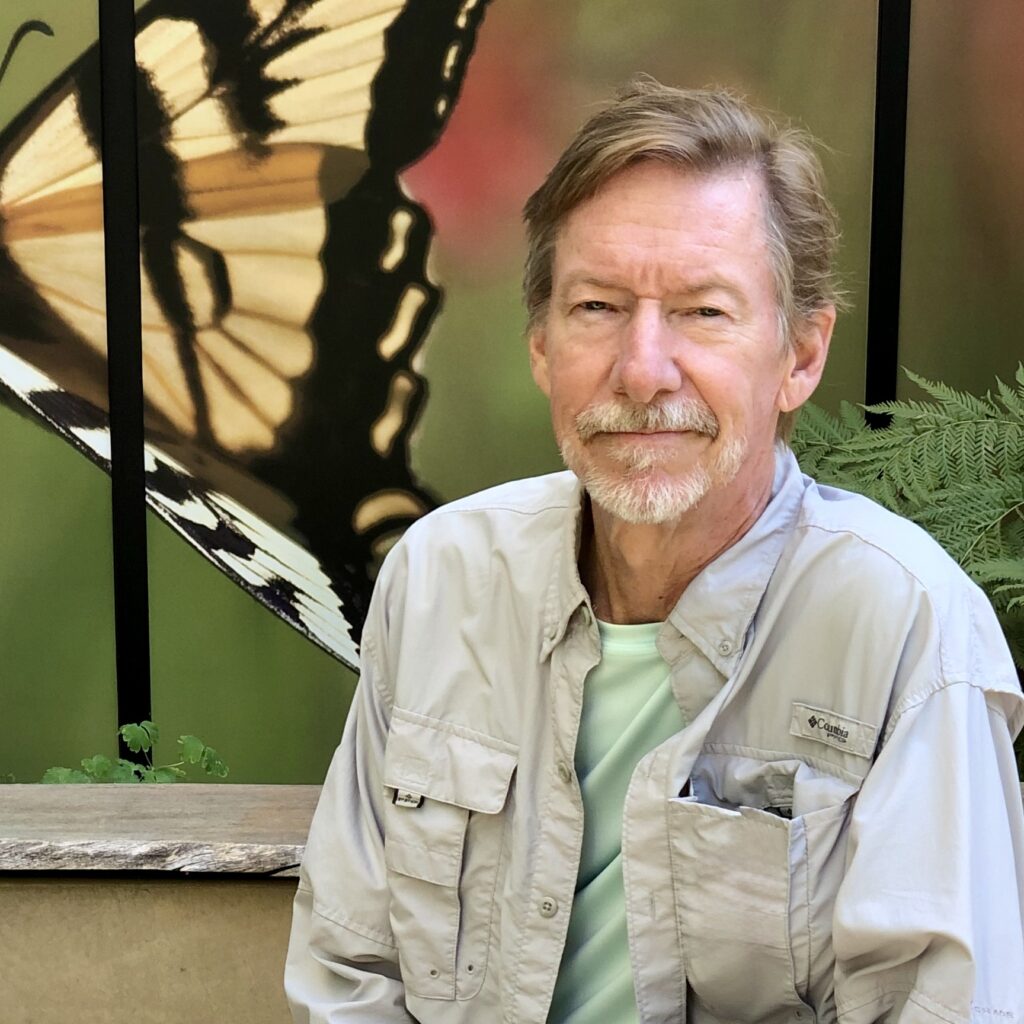
On today’s episode, I’m excited to be joined by screenwriter Eric Luke to talk about Joe Dante’s 1985 sci-fi adventure EXPLORERS – a film starring River Phoenix and Ethan Hawke, both in their mid-teens.

After the success of GREMLINS, EXPLORERS was expected to become Joe Dante’s next amazing success story. But unfortunately, the movie wasn’t finished properly, and after it was released to some very lukewarm reviews, it quickly disappeared – only to become a minor cult classic later on, thanks to its unique tone and humor. The film is about three youngsters who build themselves a home-made spaceship to travel to the stars – and it is impossible to fully discuss the film without spoiling the big surprise that awaits our heroes, so if you want to experience the full effect of EXPLORERS, please watch the movie before listening to this conversation! And if you’ve already seen the film, I’m quite sure you’ll agree that it’s definitely a unique experience.

So it’s wonderful to welcome the writer of EXPLORERS, Eric Luke, who’s going to talk about how this story came together, which influences he and director Joe Dante drew from, and how they developed the third act and the ending of the film. Eric and I also discuss some of the problems the production ran into, and some of the things which could have been different in the finished version if the post-production process hadn’t been cut short. And we’ll talk about the legacy of the film, and how it continues to attract new audiences who are drawn to the fact that it’s a sci-fi adventure unlike any other.
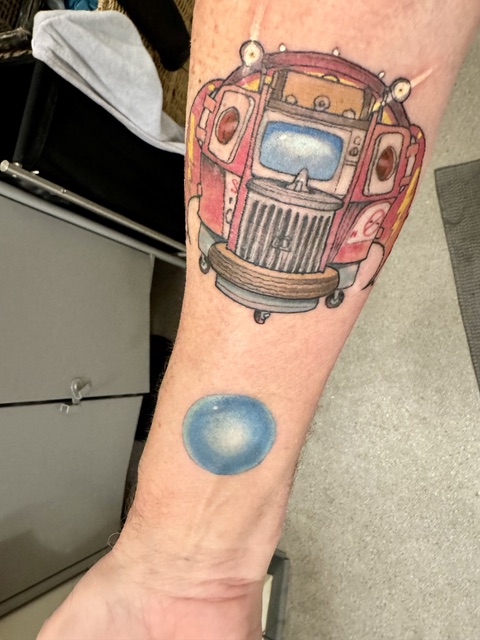
Eric Luke’s very own EXPLORERS tattoo.

My interview with Eric Luke was conducted in connection with our German-language podcast Lichtspielplatz and the 2026 Science Meets Fiction festival, so if you speak German, please check out Lichtspielplatz episode #94, which features an in-depth discussion of EXPLORERS. You’ll also find episodes on other sci-fi movies and ideas as part of our Science Meets Fiction special.

So without any further ado, here’s screenwriter Eric Luke!

The mp3 file can be downloaded HERE.

Photos courtesy of Eric Luke
Editing: Christoph Schwarz
Music: Clark Kent

#44 – “I was always competing with TRON”: Director Steven Lisberger about his sci-fi adventure SLIPSTREAM

Today’s conversation was a hugely thrilling and exciting occasion for me, because the man I spoke to is a true pioneer and a legend of sci-fi cinema, and the movie which he’s most famous for is one which really resonated with me when I first saw it as a teenager, and it’s continued to hold that fascination throughout the years. I’ve had the immense pleasure of talking to Steven Lisberger, the writer and director of TRON, an immensely influential 1982 movie in which Jeff Bridges travels into the virtual world inside the computer, which to a young kid interested in technology and filmmaking back then was definitely a heady and inspiring journey.

But Steven has done much more. And so the film I wanted to discuss with Steven is a different sci-fi film he made, one which hasn’t been talked about as widely as TRON – it’s a film called SLIPSTREAM, released in 1989, starring Bill Paxton and Mark Hamill, and produced by Gary Kurtz, who produced AMERICAN GRAFFITI and the first two STAR WARS movies. It’s set in a dystopian world after a climate collapse where people travel by little airplanes, using the massive winds which have made a lot of the Earth’s surface barren. Hamill is a bounty hunter who has arrested a man for murder, and Paxton is a rogue who steals the prisoner in order to collect the money himself – and then it turns out that the man is actually an android, an artificial intelligence who has turned against his master. SLIPSTREAM is not a perfect film – there were problems during the production, and it was barely released when it was finished – but it’s also a film which offers not only a lot of pleasures, but also a lot of food for thought, with literary references, political satire, and an interesting examination of our relationship to technology.

So, in our conversation, Steven talks about the circumstances under which the film came together, and we dive deep into the ideas and philosophies of the film and their connections to modern-day discussions about artificial intelligence, for example. He also discusses the difference between making a film like TRON, which was very much influenced by his background in animation, and live-action filmmaking, he talks about one of his unmade projects about the Wright brothers, we touch upon his recently released sci-fi novel TOPEKA, and much more.

My interview with Steven Lisberger was conducted in connection with our German-language podcast Lichtspielplatz, so if you speak German, please check out episode #80, which features an in-depth discussion of SLIPSTREAM.

If you enjoy my interviews here on Talking Pictures, please consider heading over to patreon.com/TalkingPicturesPodcast to support the production of new episodes.

So without any further ado, here’s Steven Lisberger, discussing how he became to SLIPSTREAM!

The mp3 file can be downloaded HERE.

Photo courtesy of Steven Lisberger
Editing: Christoph Schwarz
Music: Clark Kent

#43 – “I wrote the screenplay with no expectations”: Mike Rich on FINDING FORRESTER

For today’s episode, I’ve had the immense pleasure of talking to screenwriter Mike Rich about his very first film, FINDING FORRESTER. Directed by Gus Van Sant, the film came out in the year 2000 and features the legendary “original James Bond” Sean Connery as a reclusive writer in the vein of J.D. Salinger, named William Forrester, who starts mentoring a young 16-year old black kid from the Bronx, Jamal, played by then-newcomer Rob Brown, who divides his time between playing basketball with his friends and at school and his secret interest in writing and literature. The film also stars a ton of other wonderful actors, including F. Murray Abraham as a condescending professor of literature, Anna Paquin as Jamal’s love interest, Claire, Michael Nouri as Claire’s father, Michael Pitt as one of Jamal’s schoolmates, and even rapper Busta Rhymes as Jamal’s brother. It’s a film which I’ve seen many times over the years, and its themes of studying great literature, finding your own creativity, developing an unusual friendship out of a student-mentor relationship, and looking back at the twists and turns of the past have always resonated very strongly with me.

In our conversation, Mike remembers how he wrote the script without having any expectations of it getting made and its journey to suddenly having Sony, Gus Van Sant and Sean Connery interested in it. He discusses developing the story with Van Sant and Connery, talks about the wonderful performances, especially by Rob Brown, and, naturally, he talks about the process of writing, about sports, and all the other themes and ideas of his story. We also touch upon some of Mike’s other films, such as the baseball drama THE ROOKIE starring Dennis Quaid, the ice hockey movie MIRACLE starring Kurt Russell, the horseracing film SECRETARIAT starring Diane Lane and John Malkocih, or the Pixar movie CARS 3.

My interview with Mike Rich was conducted in connection with our German-language podcast Lichtspielplatz, so if you speak German, please check out episode #79, which features an in-depth discussion of FINDING FORRESTER.

If you enjoy my interviews here on Talking Pictures, please consider heading over to patreon.com/TalkingPicturesPodcast to support the production of new episodes.

So without any further ado, here’s Mike Rich!

The mp3 file can be downloaded HERE.

Photos courtesy of Mike Rich
Editing: Christoph Schwarz
Music: Clark Kent
Thanks to Aaron Kaplan and Grace Sebastian for organizing the interview.

#41 – “Roger Corman Said I Was More Radical”: Composer/Music Producer Mike Curb on THE WILD ANGELS and Other Biker & Counterculture Films

Today’s guest is Mike Curb, best known as the head of the independent record label Curb Records, which started out in 1964 as Sidewalk Records and is still going strong in 2025. Over the years, Curb have released records like the best-selling COYOTE UGLY soundtrack album and music by Gloria Gaynor, Willie Nelson, Bananarama, The Four Seasons, LeAnn Rimes, Sixpence None the Richer and many other great artists. Mike Curb has also served as the lieutenant governor of California from 1979 to 1983, he’s owned a NASCAR team, he renovated a house owned by Elvis Presley, he supports many charity programs through the Mike Curb Family Foundation, and much more.

The focus of our conversation, however, lies on the films Mike Curb was involved in back in the 1960s. He scored Roger Corman’s biker movie THE WILD ANGELS starring Peter Fonda and worked on numerous other biker and counterculture films of the era – he produced the soundtracks for films like THE GLORY STOMPERS starring Dennis Hopper or THE DEVIL’S ANGELS starring John Cassavetes, he scored Richard Rush’s THE SAVAGE SEVEN, he released the music for Corman’s LSD film THE TRIP on his label, and was involved in many of the other films released by American International Pictures at the time – and so his music was instrumental in creating the sound of that particular part of film history.

My interview with Mike Curb was conducted in connection with our German-language podcast Lichtspielplatz, so if you speak German, please check out episode #77, which features an in-depth discussion of THE WILD ANGELS and other biker films of that era.

If you enjoy my interviews here on Talking Pictures, please consider heading over to patreon.com/TalkingPicturesPodcast to support the production of new episodes.

So without any further ado, here’s Mike Curb!

The mp3 file can be downloaded HERE.

Photos courtesy of Mike Curb
Editing: Christoph Schwarz
Music: Clark Kent
Thanks to Becky Judd for organizing the interview.

#40 – “He Would Have Been So Happy About This Notoriety”: Ed Wood Heir Bob Blackburn on the PLAN 9 FROM OUTER SPACE Director’s Legacy

Today’s guest is Bob Blackburn – he’s the son of the famous sportscaster by the same name, Bob Blackburn, who was the play-by-play voice of the Seattle SuperSonics of the NBA and was inducted into the Sports Halls of Fame in both Oregon and Washington. Bob, the son, also has a background in radio, but the reason I’m talking to him today is the book he just released: KATHY WOOD & I – HOW I FELL DOWN THE ED WOOD JR. ANGORA RABBIT HOLE. Bob, you see, is the custodian of the estate of the independent filmmaker Ed Wood – the legendary, famous or infamous director, writer and producer of films like PLAN 9 FROM OUTER SPACE, GLEN OR GLENDA and BRIDE OF THE MONSTER, which are sometimes called cult classics, sometimes called “the worst movies of all time”, but in both cases are appreciated and celebrated for offering a kind of cinema that’s wonderfully different and unique. Bob became friends with Ed Wood’s widow, Kathy Wood, and in his book, he paints a vivid picture of a very unusual friendship and talks a lot about Ed Wood’s work and his legacy. In our interview, Bob discusses the legacy of Ed Wood, his friendship with Kathy, the Tim Burton biopic starring Johnny Depp which came out in 1994, and much more.

Bob Blackburn with Kathy Wood, Ed Wood’s widow.

My interview with Bob Blackburn was conducted in connection with our German-language podcast Lichtspielplatz, so if you speak German, check out episode #74, which features an in-depth discussion of Burton’s ED WOOD and the Ed Wood movies.

If you enjoy my interviews here on Talking Pictures, please consider heading over to patreon.com/TalkingPicturesPodcast to support the production of new episodes.

So without any further ado, here’s Bob Blackburn!

The mp3 file can be downloaded HERE.

Photos courtesy of Bob Blackburn
Editing: Christoph Schwarz
Music: Clark Kent

#39 – “I Still Don’t Feel the Code Has Been Cracked on How to Adapt These Things”: Screenwriter Dave Callaham on DOOM

Today’s guest is screenwriter Dave Callaham, and our conversation revolves around one of his early screenwriting assignments: the adaptation of the influential video game DOOM by id Software, turned into an action movie starring The Rock in 2005. Dave quickly became an in-demand writer in Hollywood, and his credits include a ton of high-profile action movies and blockbusters – he wrote the initial script of what would then became Sylvester Stallone’s THE EXPENDABLES, he worked on films like GODZILLA and ZOMBIELAND: DOUBLE TAP, he was a screenwriter on big comic book movies like WONDER WOMAN 1984, SHANG-CHI AND THE LEGEND OF THE TEN RINGS and SPIDER-MAN: ACROSS THE SPIDER-VERSE, and apart from that, he was the creator of the Amazon series JEAN-CLAUDE VAN JOHNSON and the writer and producer of a satirical animation film, AMERICA: THE MOVIE.

Our interview, however, focuses on DOOM. Dave talks about the aspects of the game which he wanted to bring to the screen and about some of the changes that were made, He also discusses the film’s legacy and his collaboration with original director Enda McCallion – who was replaced by Andrzej Bartkowiak during pre-production – and he talks about his work on another video game adaptation, the 2021 action film MORTAL KOMBAT. Please note that the connection during our interview was a bit shaky, so the sound quality may be a bit wobbly at some points during the interview – but you won’t have any problems following our conversation.

My interview with Dave Callaham was conducted in connection with our German-language podcast Lichtspielplatz, so if you speak German, please visit lichtspielplatz.at and check out episode #71, which features an in-depth discussion of the two DOOM movies. Also, make sure to listen to my conversation with original DOOM director Enda McCallion and my interview with Tony Giglio, the writer/director of the second DOOM movie DOOM: ANNIHILATION.

If you enjoy my interviews, please consider heading over to Patreon and supporting the production of new episodes.

So without any further ado, here’s screenwriter Dave Callaham!


The mp3 file can be downloaded HERE.

Photo courtesy of Dave Callaham
Editing: Christoph Schwarz
Music: Clark Kent

#38 – “I Started Becoming Very Irresponsible”: Director Enda McCallion Explains How He Got Fired from DOOM (and What He’s Up to Now)

Today’s guest is Irish filmmaker Enda McCallion, and our interview was prompted by his involvement in the 2005 horror film DOOM starring The Rock, an adaptation of the influential video game by id Software. Enda was attached to the project in its initial stages and during pre-production, but was then fired and replaced by Andzrej Bartkowiak as the new director. Here, for maybe for the first time, Enda talks about his experience developing DOOM and explains what happened during pre-production, and he also gives us a glimpse of what his version of DOOM would have looked like and what remains in the finished film.

Enda McCallion originally garnered attention as a director of very unusual, daring, funny and often subversive commercials. His best-known work is the Judderman commercial for the Metz alcopop drink, shot in a silent movie-inspired fashion and featuring a strange creature, the Judderman, luring a hapless wanderer deep into the woods with the Metz drink. Other notable commercials include two edgy spots for Gervais, featuring a lesbian couple with one girl torturing her lover by denying her access to the Gervais ice cream, or a McDonald’s spot depicting a group of aliens ready to attack humans coming out of a McDonald’s restaurant because, as they say, “they taste better afterwards”. Enda also made spots for companies like Nestea, Fanta, Citroen, Renault, Opel, Samsung, and he directed one of the most lavish commercials ever made, the “Ryder Cup 2006” for Allied Irish Bank, which was shot on over 20 locations with hundreds of extras. Enda also created a music video for Nine Inch Nails, “Deep”, and a few years after his DOOM experience, he directed a horror film called HIT AND RUN, an intense low-budget film which displays the same dark sense of humor and visual pizzaz that could be seen in his commercials. In our interview, Enda moves beyond DOOM to discuss his style and his approach to storytelling and directing, he shares anecdotes about several of his projects, and he talks in-depth about several projects which never came to be, and some which are currently in development.

My interview with Enda McCallion was conducted in connection with our German-language podcast Lichtspielplatz, so if you speak German, please visit lichtspielplatz.at and check out episode #71, which features an in-depth discussion of the two DOOM movies. Also, make sure to listen to my conversation with DOOM screenwriter Dave Callaham, and my interview with Tony Giglio, the writer/director of the second DOOM movie DOOM: ANNIHILATION, here on Talking Pictures.

If you enjoy my interviews, please consider heading over to Patreon and supporting the production of new episodes.

So without any further ado, here’s director Enda McCallion!


The mp3 file can be downloaded HERE.

Photos courtesy of Enda McCallion
Editing: Christoph Schwarz
Music: Clark Kent

#37 – “You’re Never Going to Meet Up with Expectations”: Director/Writer Tony Giglio on His Video Game Adaptation DOOM: ANNIHILATION

Today’s guest is filmmaker Tony Giglio, and our conversation revolves around his 2019 film DOOM: ANNIHILATION which he wrote and directed. Unlike the 2005 DOOM movie starring The Rock, this newer adaptation of the infamous and influential ego shooter video game by id Software was made on a very small budget, and it’s not a sequel or remake, but basically a new take on the story of a marines team fighting a horde of demons which infiltrated a space station on Phobos, one of the moons of Mars. DOOM: ANNIHILATION is a well-made, fun action film which finds a good balance between thrills, carnage, horror and excitement – and it has a lot of details capturing the spirit of the game. In our interview, Tony talks about the development of the film, the adaptation process, the budgetary restraints of the production and the appeal of the game. He also discusses why id Software weren’t involved and how a miscommunication caused premature negative reactions, and for the first time, he talks about the sequel he wanted to do, which was essentially greenlit, then postponed during the pandemic and eventually and unfortunately cancelled.

Tony Giglio started out in Hollywood as an assistant on several cult classics, including Michael Mann’s HEAT, Sam Raimi’s THE QUICK AND THE DEAD, and John Carpenter’s ESCAPE FROM L.A. As a writer and director, Tony’s made several other cool low-budget movies, some of which he also discusses during our conversation – most notably his 2005 action thriller CHAOS starring Jason Statham, Ryan Philippe and Wesley Snipes. He also directed movies like the tense submarine thriller IN ENEMY HANDS starring William H. Macy and Til Schweiger or the dark backwoods horror film TIMBER FALLS, and as a screenwriter, he worked on the DEATH RACE sequels for Paul Anderson.

My interview with Tony Giglio was conducted in connection with our German-language podcast Lichtspielplatz, so if you speak German, please visit lichtspielplatz.at and check out episode #71, which features an in-depth discussion of the two DOOM movies. Also, make sure to listen to our interviews with the original director of the 2005 DOOM movie, Enda McCallion, and my conversation with DOOM screenwriter Dave Callaham here on Talking Pictures.

If you enjoy my interviews, please consider heading over to Patreon and supporting the production of new episodes.

So without any further ado, here’s director Tony Giglio!

The mp3 file can be downloaded HERE.

Photos courtesy of Tony Giglio
Editing: Christoph Schwarz
Music: Clark Kent

#36: “Nobody Said: Wow, We’re Doing Something Revolutionary Here”: Ron Bonk on his Early Found-Footage Film STRAWBERRY ESTATES

Today’s guest is Ron Bonk, best known as the owner of the New York-based underground production and distribution company SRS Cinema. Ron started out as a filmmaker in the shot-on-video world of the 1990’s, writing and directing low-budget genre films like CITY OF THE VAMPIRES and THE VICIOUS SWEET. He went on to direct several independent horror films like CLAY, MS. CANNIBAL HOLOCAUST or the tongue-in-cheek HOUSE SHARK. With SRS Cinema, he’s produced and distributed numerous other films with splendid titles such as AMITYVILLE BIGFOOT, PUPPET SHARK or COCAINE CRABS FROM OUTER SPACE.

Our conversation revolves around a found footage film Ron Bonk made in the late 90’s called STRAWBERRY ESTATES, the story of a professor and his student who, along with a medium and a cameraman, venture into an abandoned insane asylum to communicate with the dead – what could possibly go wrong? Ron made the film twice – once in 1997, and then again in 1999, for a mere $400, to capitalize on the success of THE BLAIR WITCH PROJECT. In our conversation, Ron talks about the making of both versions, and how he approached the found footage aesthetic and its spirit of authenticity. He also talks about his first ventures into the world of filmmaking, and how his film poked fun at the conventions of no-budget films while embracing the shot-on-video aesthetic which has very much become a standard these days.

The interview was conducted in connection with our German-language podcast Lichtspielplatz, so if you speak German, please check out Lichtspielplatz episode #68, which features an in-depth discussion of STRAWBERRY ESTATES and many other found footage horror films. Also, make sure to listen to our interviews with found footage filmmakers Ted Nicolaou, Brian Leslie, Stefan Avalos and Dean Alioto here on Talking Pictures.

So without any further ado, here’s director Ron Bonk!

The mp3 file can be downloaded HERE.

Photo courtesy of Dean Alioto
Editing: Christoph Schwarz
Music: Clark Kent

#35: “It’s Good to Be Ahead of Your Time, But Not a Decade”: Director Dean Alioto on Pioneering Found Footage Film UFO ABDUCTION

Today’s guest is Dean Alioto, writer and director of the groundbreaking found footage horror film UFO ABDUCTION, which also became known as THE MCPHERSON TAPE. The film tells the story of a family whose house is surrounded by alien creatures one night, and while the panicked people inside the house become more and more frightened and try to deal with the situation, a family members records the entire event with a 1980’s-style home video camera. Dean made the film on a shoestring budget in 1989 while he was in his mid-Twenties, and while there have been several found footage and pseudo-documentary precursors since the 1960’s, what is striking about UFO ABDUCTION is how much it anticipates the aesthetic and the storytelling that was popularized ten years later by THE BLAIR WITCH PROJECT and other found footage horror films.

In our interview, Dean Alioto talks about the making of this unusual, pioneering film, and which strategies he used to make the material more authentic. He relates the incredible and hilarious story of how the film disappeared, then reappeared and was thought to be a real recording of an actual close encounter of the third kind – which then, through many strange coincidences, led to the production of a remake called ALIEN ABDUCTION: INCIDENT AT LAKE COUNTY, which was released in 1998, again directed by Dean. We also talk about some of Dean’s other projects, including his latest horror film PORTAL, and some of his upcoming productions.

The interview was conducted in connection with our German-language podcast Lichtspielplatz, so if you speak German, please check out Lichtspielplatz episode #68, which features an in-depth discussion of UFO ABDUCTION and ALIEN ABDUCTION and many other found footage horror films. Also, make sure to listen to our interviews with found footage filmmakers Ted Nicolaou, Brian Leslie, Stefan Avalos and Ron Bonk here on Talking Pictures.

So without any further ado, here’s director Dean Alioto!

The mp3 file can be downloaded HERE.

Photo courtesy of Dean Alioto
Editing: Christoph Schwarz
Music: Clark Kent

1 2 3 … 5